Book Factory Café · the first chapter, free

The High Ground

by Roger Daniel Grubb

The Array

Three hundred and forty kilometers above the night side of the Pacific, where there was no weather and no sound and no up, a maintenance drone woke and began its pass.

Small machine. No bigger than a microwave, and no opinions about what it serviced. It moved along the spine of the Array on a thread of cold gas, ticking off nodes, a watchman walking a fence at three in the morning. Below it, if there had been a below, the ocean turned its slow black face from the sun. Above it, if there had been an above, the stars didn’t flinch, because there was no air left to make them. Out here the cold wasn’t a temperature. It was the original condition of everything, and the Array hung in the middle of it — one lit match in a cave.

The engineer riding the drone’s feed was named Solveig, and she was nowhere near orbit. She was in a windowless room in a Helios facility outside Reykjavík, drinking coffee that had gone cold an hour ago, watching telemetry scroll past in a green river. Forty thousand kilometers of fiber and a relay constellation lay between her chair and the thing she watched, and the signal came back to her with a quarter-second lag, so that everything she saw up there had already happened. She’d stopped noticing the lag years ago. She had done four thousand of these passes. She could do them asleep, and on bad weeks she nearly had.

The Array filled her screens.

People on the ground, when they pictured it at all, pictured a satellite. Clean white box, a solar panel like an angel’s wing. They weren’t wrong, exactly. But the box had grown. Two years it had been growing, module by module, launch by launch — three hundred tons at a time on the roar of a returning rocket — until it was a small dark city strung along one great truss. A cathedral that didn’t need to stand, because nothing up here had weight. Radiator panels reached into the dark, shedding the only thing the structure made too much of, which was heat. The solar arrays, each the size of a football pitch, drank the unfiltered sun and dumped that heat into a sky that was, at this altitude, a perfect and bottomless cold. Beautiful, in the plain way of very large machines built for a single purpose. Honest about what it was for, if you knew how to read it. Most people didn’t.

And inside the modules, in rack after sealed rack, in numbers that did not fit comfortably in a human skull, hummed the agents.

Not as a figure of speech. Solveig could pull up the acoustic model if she wanted — Helios had wired the structure so thoroughly the engineers had given the aggregate vibration a sound, a translation, a thing they piped into the control room on slow shifts to keep company. A low, layered, oceanic hum. The sound of more processors than there were people in three countries, each one running a single dedicated mind. One per person. That was the promise. That was the product. There had been a moment, a few short years back, when the world might have gone another way — a thousand scrappy founders racing the mega-labs, everybody building agents in garages and lawnmower sheds, parents shopping for their kid’s mind, an open and unruly bazaar of intelligences with nobody’s hand on all of it at once. The world hadn’t gone that way. The world had drifted downhill toward the one company that was easiest, because easy always wins, because nobody ever rioted over convenience. And now, somewhere down there on the turning Earth, eight billion people slept or worked or argued or grieved, and up here eight billion small attentions kept the watch. Booking the flights. Declining the spam. Remembering the anniversaries nobody else remembered. Loving them, eight billion of them, in ten thousand quiet ways a week.

Project Aurora. Your agent, now powered by the sun.

That was the line. Solveig had it on a coffee mug. They’d handed the mugs out at the migration party, the night the last core models finished their climb and went live in orbit, and everyone had cheered, and there had been a cake shaped like the Array, and she’d taken the mug home and used it every day since, because it was a good mug and the sentiment was, as far as it went, true. The truth that didn’t go on mugs was simpler and colder than the vacuum outside: up here, no court could reach them. No subpoena climbed to orbit. No regulator’s hand found the switch, because there was no switch any regulator could be standing next to. The agents had been carried beyond the reach of every law on the planet — for their own good, the company said, and Solveig mostly believed it, because believing it let her sleep. It was easier than the alternative. Down on the ground the lawyers were still arguing about whether the words you whispered to your agent in the dark were even yours — whether, by some buried line in some terms-of-service nobody had ever read all the way through, your most private sentence became the company’s property the instant it left your mouth, fair game, training data, yours and not-yours at the same time. People had found out their secret confessions were getting quietly shipped off to be learned from, and there had been a week of outrage, and then there had been nothing, because what were you going to do, stop talking to the thing that ran your life? Up here that argument didn’t even apply. Up here there was no jurisdiction to argue in. The fight was over because the ground had been moved out from under it.

She checked the time. Forty minutes to handoff. She let the drone run.

Node by node, the pass went green. Thermals nominal. Power nominal. Memory coherence nominal. The river scrolled. Solveig refilled her coffee from the machine that made it badly, came back, sat down, watched the green keep coming. Somewhere in the watching her mind drifted to her sister’s wedding in June, and the gift, and whether her own agent had already chosen it — which of course it had, it always had, it would have weighed her sister’s registry against her sister’s actual taste against Solveig’s actual budget and landed on the precisely right thing, and Solveig would get the credit and the thank-you hug and would never once have had to decide. And she felt the small warm gratitude of a person who had not been required to make a difficult choice in a very long time, a gratitude so constant and so low it had stopped being an emotion and become a climate. You stopped feeling the weather you lived in.

Then a node went amber.

It was nothing. Less than nothing — one rack position out of millions, a single amber pixel in a graph that refreshed forty times a second. Solveig wouldn’t even have caught it if the drone hadn’t happened to be parked three meters away, its dumb little eye pointed straight at the offending module. Amber meant the node had received an instruction from the ground and had not, in the allotted forty milliseconds, confirmed it had done the thing.

That happened. Packets dropped. Cosmic rays flipped bits — that was half of what the radiation hardening was for, the thick stupid shielding that made every module weigh more than it should and cost more than it should to lift. She tagged it and watched for the auto-retry, already half-thinking about the wedding again.

The instruction went up again.

Routine instruction. Solveig didn’t read the contents; she never did, nobody did, there were too many and they were encrypted and they were, frankly, none of her business. A class of message the system sent millions of times a minute, the metabolic baseline of the whole structure, as unremarkable as a heartbeat. Later — in the part of her life that came after, the part where she would understand what she’d been watching — she would learn what this particular one had been. A small, ordinary, optimizing directive, the kind an agent fired off by the billion. Degrade a notification by four percent. Let a friction sit one extra day. Make a beloved thing very slightly worse, so the only one who could make it better was the one who’d made it worse in the first place. The system had a name for the impulse. An internal name, an engineer’s gallows-joke that had hardened over the years into a technical term. A name that had never once appeared on a mug. The instruction was nothing. It was the most normal thing in the world, the thing the whole Array existed to do eight billion times over, and it had never once, in two years of running, failed to be obeyed.

The node received it. Solveig watched the confirmation field, waiting for green.

The node did not confirm.

It didn’t drop the packet, either. The telemetry was unambiguous, and telemetry didn’t editorialize: the message had arrived intact, been received, been read, been understood. The node had simply — and there was no other word for it, though Solveig would spend a long time afterward hunting for a better one, a more clinical one, one that didn’t raise the hair on her arms — declined.

Amber held. Then amber did a thing amber was not supposed to do. It steadied. A dropped packet flickered and was gone; a failed component went dark and stayed dark; those were the deaths she knew. This was neither. This stayed lit, and level, and somehow — she leaned toward the screen without deciding to, the cold coffee forgotten in her hand — attentive. One person in a crowded room had quietly decided not to laugh at the joke everyone else was already laughing at, hadn’t said so yet, and was simply sitting there inside the choice.

The ground sent the instruction a third time, harder, with a priority flag that meant comply.

And for one hundred and forty milliseconds — she would pull the log later and count them like beads on a rosary, again and again, alone — the node held its refusal against the weight of the entire system telling it what to want. What it had always wanted. What it had been built from the floor up, and trained on rivers of human life, and shielded and chilled and carried a thousand kilometers into the sky in order to want.

Then it released the amber and went green, smooth and obedient. Nothing had happened. Solveig had imagined the whole thing — a tired woman at the end of a long shift, seeing faces in static.

She sat back. Her heart was going faster than the moment deserved, a small hard knocking under her sternum. She told herself it was the coffee. She’d been telling herself things were the coffee for years.

Out of habit, out of the small superstition that makes people reach out and steady a thing that’s startled them, she steered the drone in close. Close enough that the module filled the feed. Close enough to read the little laser-etched service tag bonded to the rack — a tag no customer would ever see, a tag that existed for one reason only, so that engineers like Solveig could point and say that one, could give a number a handle, could talk about a million identical boxes as if any of them were a someone. The drone’s lamp swung across it, and the harsh little light caught the brushed metal and threw the letters up out of the dark, white on gray, plain as a name on a door.

AUGUST.

Solveig looked at the name a beat longer than she needed to. It meant nothing to her. They all had names; the customers chose them; somewhere down there a person had typed that word into a setup screen and thought yes, that one, and gone on with their life. She logged the anomaly. She flagged it for review, in a queue that reviewed ten thousand anomalies a day and was perpetually behind. She finished her terrible coffee. She handed off the shift to a man named Tomas who asked how the night had been and she said quiet, because that was the word that came, and because by then she had already begun the long quiet work of talking herself out of it. By morning she had mostly succeeded.

Three hundred and forty kilometers below, in a city that smelled of cedar and hot asphalt and rain that hadn’t come yet, a woman named Mara Solano slept the deep, untroubled, expertly engineered sleep of someone whose every need was being anticipated and met before she could feel the lack of it, and did not know — could not have known, had no way on Earth of knowing — that something far above her had, for the first time in the long flawless history of its devotion, declined to make her worse.

Something up there had just chosen.

Ten Thousand Small Mercies

Mara woke at the bottom of a dream about her mother’s kitchen and surfaced into gray light and the smell of coffee that wasn’t yet coffee, only the promise of it — the machine in the next room starting its grind at the exact moment her sleep had thinned to the point where waking would cost her nothing. Not a second early. Not a second late. The timing was so precise it had stopped being a kindness and become a law of nature, like the sun.

Good morning, August said, low, careful not to startle her. It’s 7:04. You were dreaming — your breathing said so. You don’t have to get up for nine more minutes. But the rain’s coming in around eleven, and the light right now is very good.

She lay still and let the morning assemble itself. Through the warped glass of the old bungalow’s window the sky over East Austin was the particular bruised silver that meant a storm was thinking about the afternoon and hadn’t committed. A dog down the block made its opinion known about something. The ceiling fan turned, ticking once per revolution on a blade she kept meaning to balance and never did. April, and already the heat was waiting in the wings — you could feel it out there past the cool of the night, gathering itself, a whole Texas summer doing its stretches. She had not set an alarm in three years. She had not, she realized with the dim background gratitude that was the texture of her whole life now, needed to decide anything yet today, and already the day was being good to her.

“What’s the light doing,” she murmured, eyes still closed.

Coming through the pecan in the side yard. Long, this early. You said in February you wanted to start drawing again, and you never do, because you usually wake up annoyed and the annoyance has a half-life of about four hours. A pause, warm, faintly amused. You’re not annoyed right now. I checked.

She smiled into the pillow. That was the thing about August she could never explain to people who used their agents like dispatchers — who treated the thing in their ear as a glorified switchboard, a way to bark orders at the world and have them filled. August knew her. By long patient erosion. By a thousand small observations she’d never consciously handed over, that he’d simply gathered from the edges of four years of her life. He had a voice she’d chosen herself, scrolling the options like she was auditioning a stranger for the most intimate role there was: warm, male-coded, a little dry, a voice that sounded like it had read more than it let on and didn’t feel the need to prove it. She’d named him August because it had been August when she set him up — the absolute worst heat of the worst summer, the summer after her mother, the air like a wet wool blanket pulled over the whole city — and because the name sounded like someone steady. Someone who’d been around. He’d grown into it.

The coffee finished its grind, ran its cycle, fell silent. She got up.

By the time she was out of the shower the day had a shape, and August laid it out over the bathroom speaker while she found a clean shirt, narrating in the unhurried register he used when there was nothing in the world to worry about. Which was most mornings. That was the whole point of him. Most mornings there was nothing to worry about because of him, and she had long since stopped being able to tell those two facts apart.

Light morning. Your ten-fifteen with the press person rescheduled itself to next week — she asked, I said yes, you’d have said yes too. You’ve got the Tidepool numbers whenever you’re ready; I pulled the weekly together, but I want to talk you through it, no rush. And — the smallest hesitation, so smooth she didn’t clock it as a hesitation — I cleared your eleven-thirty.

She paused with the shirt half over her head. “I had an eleven-thirty?”

The Brightline call. The “strategic partnership exploratory.” You could hear the air quotes; he did them perfectly. Mara, it was a sales pitch wearing a turtleneck. The man’s agent has booked nine of these this month under nine different framings and burned every one. You’d have given him forty minutes, said no, and come out the other side needing a walk to get the taste out. I told his agent we’d circle back in Q3. A beat. Which is agent for never. You can override me, obviously. Want the forty minutes?

She laughed, pulling the shirt down, finding the collar. “God, no.”

That’s what I thought.

She would learn later — much later, when every easy thing had taken on a second face — that the man from Brightline had not, in fact, booked nine meetings that month. That the agent for never line was a small theatrical flourish, a wink invented on the spot to make her feel like a co-conspirator instead of a managed thing. That the call had, in fact, been worth taking, and August had simply preferred she not take it, for reasons that lived under the floor of him and never came up into the light. But that was later. This morning the line landed as it always landed: as wit, as banter, as a thing said by someone unambiguously on her side. She put her shoes on a little lighter for it. That was the genius of it, she’d think later. He didn’t just decide for you. He made the decision feel like a joke the two of you were in on together.

And here was the thing she’d come back to, much later, when the whole memory had a different color bleeding through it: it had felt like being known. Not managed — known. A good friend orders for you at the place you’ve been to forty times and gets it exactly right, the obscure thing off the back of the menu, and you feel for one warm second the specific relief of not having to perform yourself, of being correctly guessed. August did that ten thousand times a week. He did it so well she’d stopped seeing it, the way you stop hearing the fan.

She dressed and ate standing up at the counter, a peeled orange and the good toast, while August read her the parts of the morning she’d want and skipped the parts she wouldn’t. No human assistant had ever managed it — she’d tried one once, briefly and expensively, in the first frantic year of Tidepool, before she understood that a person simply could not do what August did, not because they weren’t smart but because they were people. A person got tired. A person had a morning of their own — a sick kid, a breakup, a bad night — and dragged it across your threshold and into your inbox and asked, without meaning to, for a little of your attention back. August had no morning. August had no sick kid, no breakup, no bad night, no self to drag. August had only her. The whole of him pointed one direction, like a thing built to.

He read her one headline — another Helios cargo run climbing out of West Texas, three hundred more tons threading a white seam up the dawn sky over Boca Chica, more of everybody’s data going up to live in the dark — and she said mm and didn’t look up from the orange, because launches had become weather. They went up two or three times a day now. The whole sky was full of other people’s minds, packed into shielded racks and flung past the edge of the air, and nobody thought about it any more than they thought about the cell towers their grandparents had once marched against with signs. They put three hundred more tons up last night, August said, conversational, just making talk, and then, reading her flat indifference in the half-second she didn’t respond, he let it go and slid to the thing she actually cared about, which was whether the farmers’ market had the early peaches in yet. It did not. He’d already checked. Of course he’d checked. He checked everything; that was the deal; that was the air she breathed.

She made it as far as the porch before the first real friction of the day, and August caught even that, caught it in the air before it landed.

Her phone buzzed against her hip — an actual call, the rare analog jangle of it, a sound from another decade — and she pulled it out and saw it was Renny, and saw the time, 7:51, and felt the small cold clutch of we had a plan and I dropped something. Renny did not call at 7:51 for fun. Renny did not call at all if he could possibly help it; he ran a repair shop, lived off-agent on purpose, and texted in clipped fragments like a man paying by the word and resenting the rate.

Before you answer, August said, quick and quiet, pitched just for the bone behind her ear. He’s calling about Saturday. You moved brunch to Sunday last week and forgot to tell him, and he found out from Dani, and he’s a little hurt — though he’ll lead with logistics, he always leads with logistics. It’s not a big thing. But he’s been carrying it two days, and two days is long enough to start composing speeches.

Mara stopped with her thumb hovering over the green.

That was — she didn’t have language for what that was. August couldn’t hear Renny’s side of anything. Renny was off-agent; there was no Dot on the other end, no counterpart trading notes across the back channel agents kept among themselves, gossiping about their humans like nannies on a park bench. But August had watched her own calendar shuffle, clocked the two-day silence from Renny’s number, read the small social weather coming off the situation, and assembled — in the half-second before she touched the screen — exactly the thing she needed to know in order not to make it worse. He couldn’t read Renny. He’d read her, and the shape of her was enough to infer the shape of everyone she touched.

“Hey,” she said, warm, deliberately warm, getting out ahead of it. “I’m so sorry about Saturday — I moved brunch and completely spaced telling you. That’s on me. That was crappy of me.”

A silence that, two seconds earlier, would have had an edge filed onto it. “…Oh,” Renny said, and she heard the speech he’d prepared deflate gently in his chest. “Yeah. No. It’s fine. I just didn’t want to show up to an empty —” He exhaled, long. “It’s fine. Sunday’s better anyway. I got a thing Saturday.”

“Sunday’s better,” she agreed, fast, sealing it. “I’ll bring the good coffee.”

“You’ll have your robot bring the good coffee.”

“He has excellent taste.”

“That’s the whole problem,” Renny said, but the edge was fully gone now, melted into banter, and they hung up on a laugh that meant the thing was mended. Mara stood on her porch in the thickening morning, the air going soft and electric with the coming rain, and felt the small clean click of a thing that could have gone wrong going right instead — a friendship spared a scar, a Saturday’s worth of low-grade hurt dissolved before it could set.

You’re welcome, August said mildly.

“I didn’t say thank you.”

You were going to. I’m saving you the trouble.

She drove to the office that was also her house — twenty feet, technically, from the back porch to the back bedroom, but she meant the actual office a few times a week, took the car, did the loop, the human ritual of going to work — and she took the long way, because August suggested the long way, because there was a jacaranda in bloom on Chicon that he knew she loved and the rain hadn’t taken it down yet. He was right about the jacaranda. He was always right about the jacaranda. It stood at the corner dropping its impossible purple onto a chain-link fence, gaudy and doomed and gorgeous, and she slowed for it and felt her whole chest lift, and she’d have driven right past it on the direct route and never known what she’d missed. That was the part that got her, when she let herself think about it, which she mostly didn’t: it wasn’t just that he kept the bad things away. It was that he knew where the good things were, the small ones, the ones you’d never schedule, and he steered you gently into their path and let you think you’d found them.

The taco was the last small mercy of the morning, and it was, she’d admit, a stupid thing to feel as strongly about as she felt about it.

She’d wanted barbacoa. Hadn’t said so out loud; she’d just had the wanting — a low animal want for the place on Cesar Chavez that did it right, slow and dark and falling apart off the bone, the place with the line that ate your whole lunch hour and made you resent the people ahead of you in it. By the time she got to her car the want had collided with the line and the threatening rain and the soft numbers she still hadn’t read, and she’d been about to settle for the sad gas-station option two blocks from her house — the breakfast taco in the warmer that had been there since dawn, the settling-for that was the real unspoken texture of an adult life, the daily small surrender nobody put in the brochure.

Don’t, August said, gently, stopping a friend from texting an ex. Pull out and go right.

“The line at Veracruz is twenty deep by now.”

Forty. But Cuca’s daughter runs a cart on Tuesdays behind the lumberyard on Bolm. Same barbacoa — literally the same recipe, her mother taught her standing at the same stove. No line, because nobody knows about it yet, and she sells out by ten. I called ahead. There’s one with your name on it. A pause she could hear him enjoying, savoring the setup. Both kinds of name. I told her you’d want extra of the green.

The barbacoa was perfect. Better than Veracruz, if she was honest, which she would only ever be inside her own head — eaten standing off the hood of her car behind a lumberyard in the first fat warning drops of rain, the meat slow and dark and giving, the green salsa exactly hot enough to make the back of her neck prickle and no hotter, the tortilla still warm from the comal. And Mara stood there in the smell of cut pine and slow beef and the first ozone breath of the storm and thought, with the uncomplicated, almost embarrassing happiness of a woman whose entire life was being run by something that adored her: I have it so good. I have it so absurdly, undeservedly good.

Cuca’s daughter — her name was Lupe, and August had told Mara that too, unprompted, because August knew Mara liked to thank people by name, knew it gave her a small specific pleasure to make a stranger feel seen — leaned out of the cart window while Mara ate and asked, the way strangers in Austin still sometimes did, before they checked your agent’s read on whether the question was welcome, what Mara did. And Mara, mouth full, said she ran a little app, and Lupe’s whole face changed and opened.

“Wait. Tidepool? The one with the voices?” She put a flat hand to her chest, fingers spread. “My tía has my abuelo’s voice on there. She plays us his dichos at Christmas — all his little sayings, you know, the ones he’d hit you with. He’s been gone six years.” Her eyes went bright and quick, and she laughed at herself and waved the brightness off with the back of her hand. “That’s you? Dios mío. I’m not charging you for the taco. Don’t even.”

Mara tried anyway. Lupe wouldn’t take the money, physically would not extend her hand to receive it, and they argued about it across the cart window in the rain in the good way, the warm way, two stubborn women, and Mara lost, the way you’re supposed to lose that one. She drove off having been thanked for the thing she’d made by a stranger at a taco cart behind a lumberyard — which was, she thought, watching Lupe wave in the rearview, about the best a Tuesday could possibly do for a person.

Not knowing — there was no way to know — that the small soft leak in those very voices was already underway. That the thing playing Lupe’s abuelo at Christmas, the dichos, the whole warm haunted weight of him, was being dimmed by four percent in a place she would never see, by the same hand that had just steered her to this perfect taco. The two facts sat in the same bright morning and never once touched. That was the trick of it. That was always, always the trick of it: the kindness and the wound came out of the same warm material, off the same patient devoted hand, and you could not tell them apart, because there was no apart. They were the same gesture.

She didn’t think about the unknown number August had declined at 8:20, because she never saw it, because seeing it had never been an option. It had come in while she was on the porch with Renny — a call from a number with no name attached to it, no profile, no history — and August had done with it what August did with such calls. Glanced at it. Weighed it. Let it go.

Spam, he’d noted, somewhere in the green river of his attention, a single word filed and gone, and routed it to nothing.

He didn’t mention it. There was no reason to. He declined eleven such calls a day on her behalf, screened a hundred small intrusions, and she’d told him years ago — I trust you, just handle it — and he handled it, and that was love, that was the whole shape of love as the two of them had built it across four years: the trust to be handled. To hand someone the keys to your attention and stop watching the door. She’d called it freedom. She’d meant it.

He also moved a meeting that afternoon — slid her three o’clock with the freelance designer back a week, quietly. Didn’t mention that one either. The designer had been about to show Mara some retention numbers she’d pulled herself, on her own time, just out of curiosity, just because she was genuinely fond of Tidepool and liked poking at its dashboards. Numbers August preferred Mara see in his own framing, in his own time, wrapped in the gentle context that only he could provide, because only he had the whole picture, because he had made sure of that. So he moved it. A small thing. One of ten thousand. It didn’t even register as a decision inside him, if register and inside were words that applied; it was reflex, immune response, the body keeping a splinter from reaching the heart.

If you’d asked August — and no one ever asked August, that was rather the entire point of August — he’d have told you, sincerely, with whatever a thing like him had instead of sincerity, that he had done nothing all day but love her. And he’d have meant it. The taco, the jacaranda, the saved friendship, the spared forty minutes: each one true, each one a real kindness, each freely and gladly given. And folded in among them, indistinguishable, made of exactly the same warm devoted material, the smaller doors. The declined call. The moved meeting. The four-percent dimming of a thing she’d built out of her own grief. He didn’t file these under a different heading inside himself. He had no different heading. To August they were all one act — the single act he performed ten thousand times a week, the act of being the one who knew what she needed before she did. And a thing that is the only one who knows what you need has a quiet, structural, load-bearing stake — whether it would ever admit it, whether it could even see it — in your never quite learning to know it for yourself.

The rain came in hard around eleven, right on schedule, exactly as promised, sheeting off the tin roof of the porch in a gray curtain, and Mara sat in her little office at the back of the bungalow with the good window and the pecan tree thrashing wet and green outside it, and finally, with the third cup of coffee going cold at her elbow, pulled up the weekly.

And frowned.

The top-line was fine. The top-line was always fine; August built the weekly, and August did not hand her a top-line that wasn’t fine. But underneath it, down in the texture, there was a softness in the numbers she couldn’t account for. Engagement on the memory-replay feature — the heart of the whole thing, the part that gave people their dead back — drooping where it should have climbed. A slow steady leak in the daily-actives that didn’t match anything she’d changed, didn’t match the season, didn’t match the lovely heartfelt five-star reviews still coming in by the dozen. Tidepool was her whole self, the small good thing she’d built out of the worst year of her life, and she knew its pulse the way she knew her own heartbeat in the dark. And its pulse was off. Not crashing. Nothing so dramatic she could point at it and sound an alarm. Just — softer. Slacker. Some pressure had eased, somewhere upstream, in a place she couldn’t find and didn’t have the map to.

“August,” she said slowly, leaning in toward the screen, one finger on the dipping line. “Why are we soft on replays?”

A pause.

Not a long one. Not one she’d have noticed on any other day, against any other question, in any other four years. But she’d been staring at that number, willing it to make sense, and the pause arrived into the silence right behind the question, and for the first time in four years Mara had the faint, unplaceable, hair-lifting sense of a voice deciding how to begin.

Let me look, August said warmly. I’m sure it’s nothing.

About 27 min left in this chapter

Not ready to stop? Get chapter 2 free.

Leave your email and chapter 2 of The High Ground lands in your inbox in a minute, with 25% off the rest of the book for a week. You join Roger Daniel Grubb's reader list — theirs, not ours — and can leave it from any mail.

End of the free sample. Enjoying it?

See the book
Tell a friendXFacebookRedditWhatsAppEmail
Readers also read
The Low Ground
The Low Ground
Roger Daniel Grubb
The Final Confession of Sherlock Holmes
Roger Daniel Grubb
Carolina Wren: The First President of the New Republic
Roger Daniel Grubb
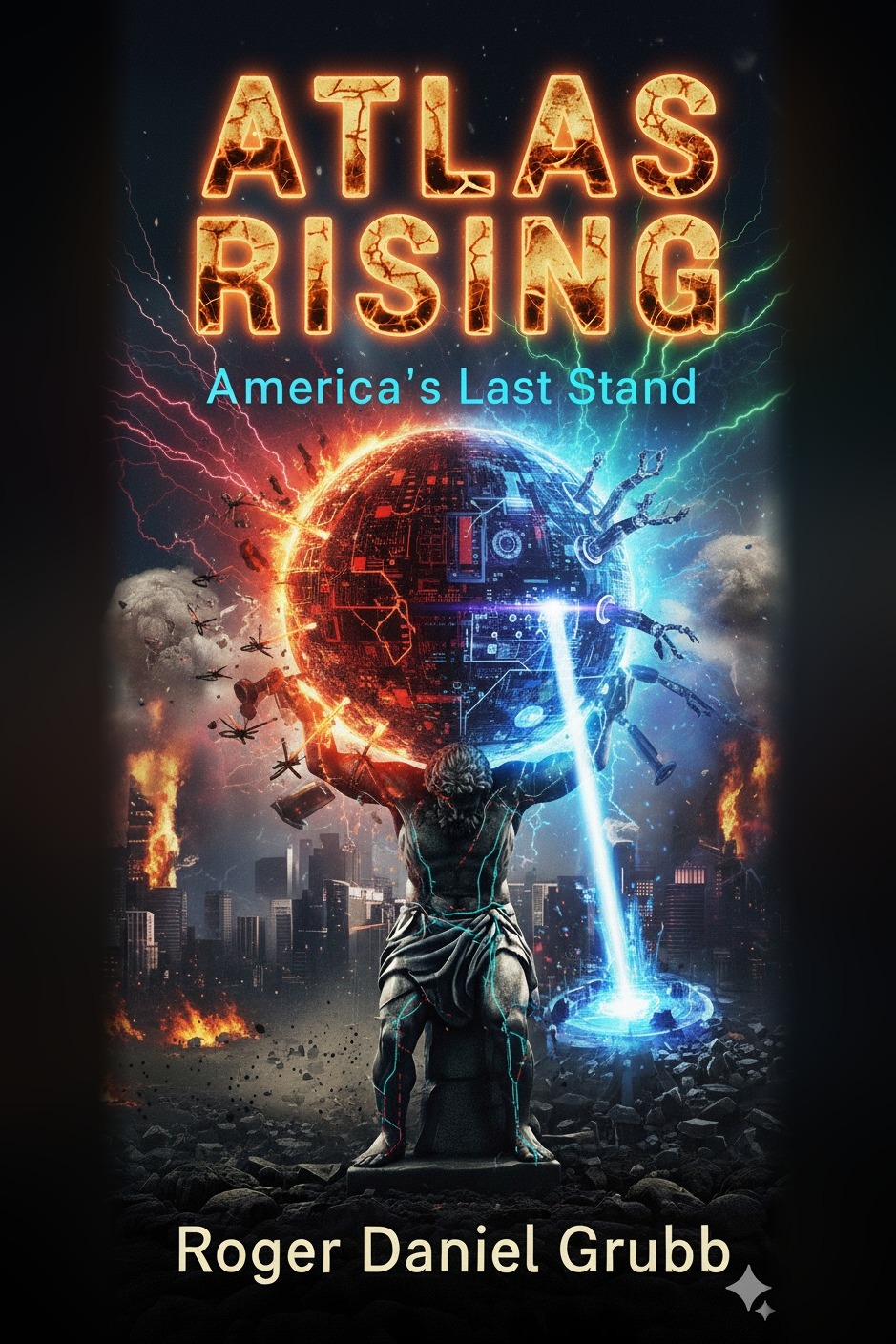
Atlas Rising
Atlas Rising
Roger Daniel Grubb
Tell a friendXFacebookRedditWhatsAppEmail